
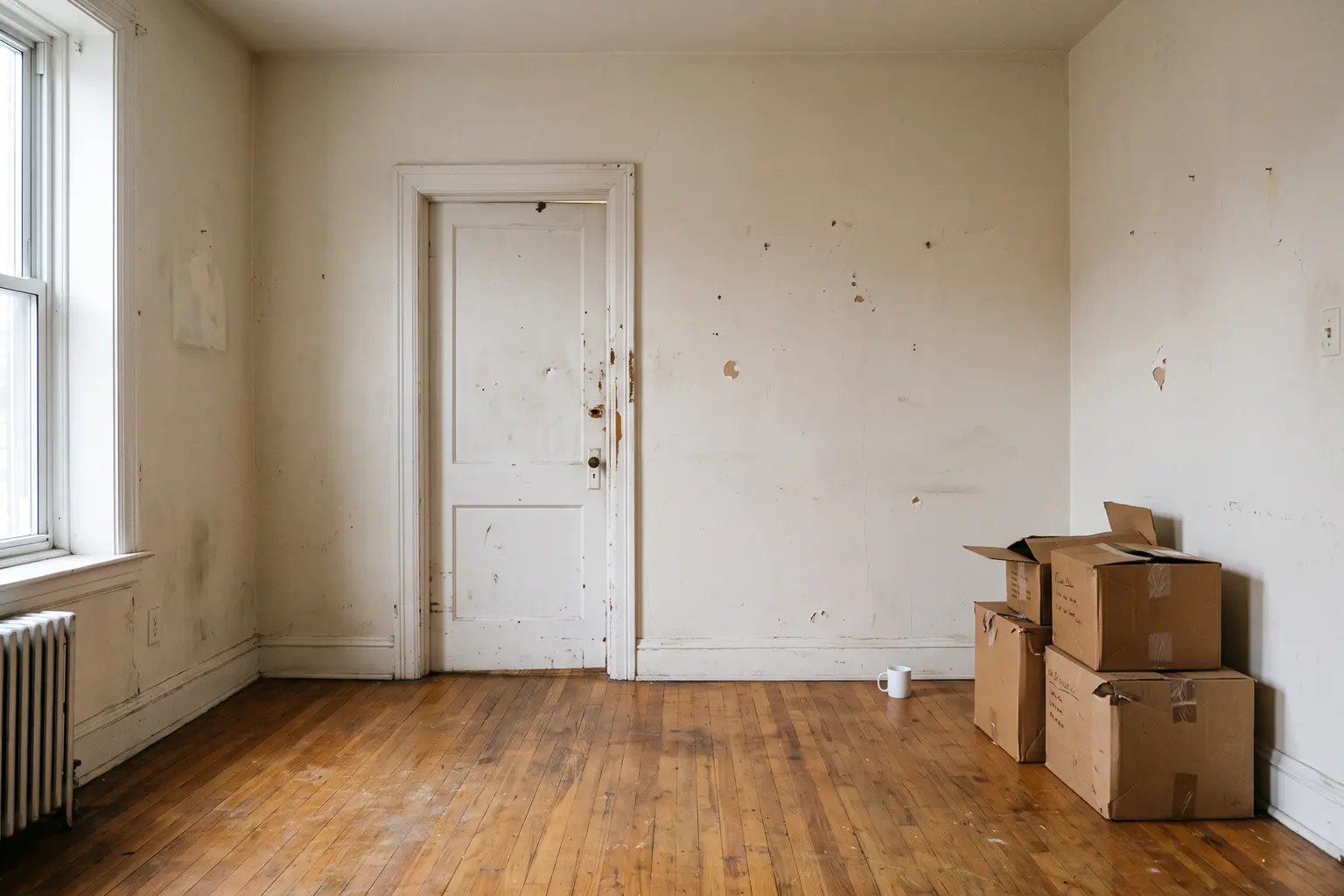
Every Texas landlord eventually opens a door on a unit that looks worse than it did at move-in and asks the same question: will insurance pay for this? The answer almost never depends on how bad the damage looks. It depends on how the damage happened. Insurers sort tenant damage into three buckets — accidental, negligent, and intentional — and the bucket decides the claim. This guide walks through how a Texas dwelling policy treats each one, and what a landlord falls back on when the policy says no.
The distinction that decides the claim
Landlord insurance in Texas is written on a dwelling fire policy, usually the DP-3 special form for an occupied long-term rental. (Our Texas landlord insurance guide covers the forms, costs, and exclusions in full.) A dwelling policy does not ask who caused a loss so much as what caused it. That framing produces three very different outcomes for tenant damage.
Accidental damage tied to a covered peril is generally covered. A tenant leaves a pan on the stove and starts a kitchen fire. A tenant’s overloaded outlet sparks an electrical fire. A guest backs a car into the garage door. These are fires and impacts — perils the policy covers — and the fact that a tenant set the chain of events in motion does not change that. The Insurance Information Institute’s framing is the industry’s: damage from a covered peril is covered; the tenant’s role in causing it is usually beside the point.
Negligent damage lands in the middle, and the timeline decides it. A sudden pipe burst that floods the kitchen is a covered water loss on a DP-3. The same water arriving slowly — a drip the tenant never reported, rotting the cabinet base over eight months — is gradual deterioration, and every dwelling form excludes it. Insurers pay for sudden and accidental events, not slow ones, and a tenant’s failure to report a problem is one of the most common ways a covered peril turns into an excluded maintenance loss.
Intentional damage depends entirely on the policy language. This is the bucket that surprises landlords, and it gets its own section below.
What the policy forms actually say
The form number on the declarations page tells you how the policy approaches tenant damage. The North Carolina Department of Insurance publishes some of the clearest consumer guidance on the standard dwelling forms, and the structure it describes is the same one Texas carriers use.
A DP-1 basic form is a named-perils policy: it pays only for the short list of perils it names, centered on fire and lightning. Vandalism and malicious mischief is not on the base list — the NC DOI notes it can be added by endorsement, along with extended coverage perils like windstorm and hail. One thing the basic form does include that landlords often get wrong: the standard DP-1 covers fair rental value — the rent you lose while a covered loss makes the home unlivable — up to 20 percent of the dwelling limit. The persistent claim that basic forms rarely include loss of rents is a myth; the coverage is built into the standard form. (How that coverage works, and where the limits bite, is covered in our fair rental value guide.)
A DP-3 special form flips the logic: it covers any direct physical loss to the dwelling except what the policy specifically excludes. Vandalism and malicious mischief is part of that open-peril coverage rather than an add-on. For tenant damage, that makes the DP-3 the far stronger form — a sudden, accidental loss a tenant causes is covered unless an exclusion says otherwise.
Two clauses in the standard forms matter most for tenant claims. First, the wear-and-tear exclusion: every dwelling form excludes wear and tear, deterioration, and damage from animals owned or kept by an occupant. Scuffed floors, worn carpet, nail holes, faded paint, pet-clawed door frames — none of it is a claim, on any form, at any price. Second, the vacancy clause: the standard forms suspend vandalism and malicious mischief coverage once the dwelling has been vacant more than 60 consecutive days, which is exactly the window in which many rentals get vandalized between tenants.
The intentional-damage problem
The classic scenario: an eviction goes badly, and the departing tenant puts a fist through the drywall, pours concrete down a drain, and strips the copper. Is that covered?
On the standard forms, the honest answer is “often, but check.” Vandalism and malicious mischief coverage is written for deliberate destruction by someone other than the named insured, and a tenant is not the named insured. A DP-3’s open-peril structure generally picks up tenant vandalism. But carriers know this scenario, and some landlord programs add exclusions for damage caused by a tenant or the tenant’s guests, or cap it, or require a specific endorsement to buy it back. The Insurance Information Institute and TDI both give the same practical advice: ask the insurer to point to the language before you bind, because the answer lives in the specific policy, not in the form name.
The Texas Department of Insurance adds one more caution worth repeating: most homeowners insurance won’t cover damage to a rental property, or will limit what it pays. A landlord relying on the homeowners policy that came with the house — rather than a dwelling policy written for tenant occupancy — may find the tenant-damage question moot, because the whole claim is excluded. TDI also notes landlord insurance is written for traditional long-term leases, not short-term rentals.
Fallback one: the security deposit
When the policy says no — wear and tear, small negligent damage below the deductible, an excluded intentional act — Texas law gives the landlord a first recovery tool. Security deposits are governed by Texas Property Code Chapter 92, Subchapter C.
Section 92.104 lets a landlord deduct from the deposit “damages and charges for which the tenant is legally liable under the lease or as a result of breaching the lease.” The same section draws the line insurers draw: the landlord may not keep any portion of the deposit to cover normal wear and tear. The code defines normal wear and tear as deterioration from intended use — but expressly not deterioration resulting from “negligence, carelessness, accident, or abuse” by the tenant, the tenant’s household, or guests. In other words, Texas statute and the insurance industry agree on the category: ordinary aging is the landlord’s cost; damage is the tenant’s.
The mechanics matter. If any portion of the deposit is withheld, the landlord must give the tenant the balance plus a written, itemized list of deductions, and the refund is due within 30 days after the tenant surrenders the property. A landlord who withholds in bad faith is liable under Section 92.109 for $100 plus three times the amount wrongfully withheld, plus attorney’s fees — so deductions need to be real, documented, and priced at actual cost.
Fallback two: documentation and the courthouse
The deposit only works as a recovery tool if the landlord can prove the unit’s condition changed. That means a dated move-in condition report with photographs, signed by the tenant, and a matching move-out inspection. Without a move-in baseline, every dispute collapses into the tenant’s word that the damage was already there — and the same documentation gap that loses a deposit dispute also weakens an insurance claim, since the adjuster needs evidence the loss happened during the policy period.
When damage exceeds the deposit, the remaining balance is a debt the landlord can pursue directly. In Texas, justice court — the small claims forum — hears civil disputes up to $20,000, which covers the overwhelming majority of tenant-damage cases. Cases turn on the paper: the lease, the condition reports, repair invoices, and the itemized deduction notice. This guide describes the framework; it is not legal advice, and a landlord heading to court over a large loss should talk to a Texas attorney.
The bottom line
Landlord insurance covers tenant damage when the damage is sudden, accidental, and tied to a covered peril. It never covers wear and tear, and it covers intentional destruction only as far as the vandalism and malicious mischief language in the specific policy allows. The security deposit, backed by Texas Property Code Chapter 92, handles what the policy won’t — but only for landlords who documented move-in condition and itemize honestly. Buy the DP-3, read the tenant-damage and vandalism clauses before binding, and compare quotes across carriers, because how carriers handle tenant vandalism is one of the places otherwise similar policies quietly differ.