
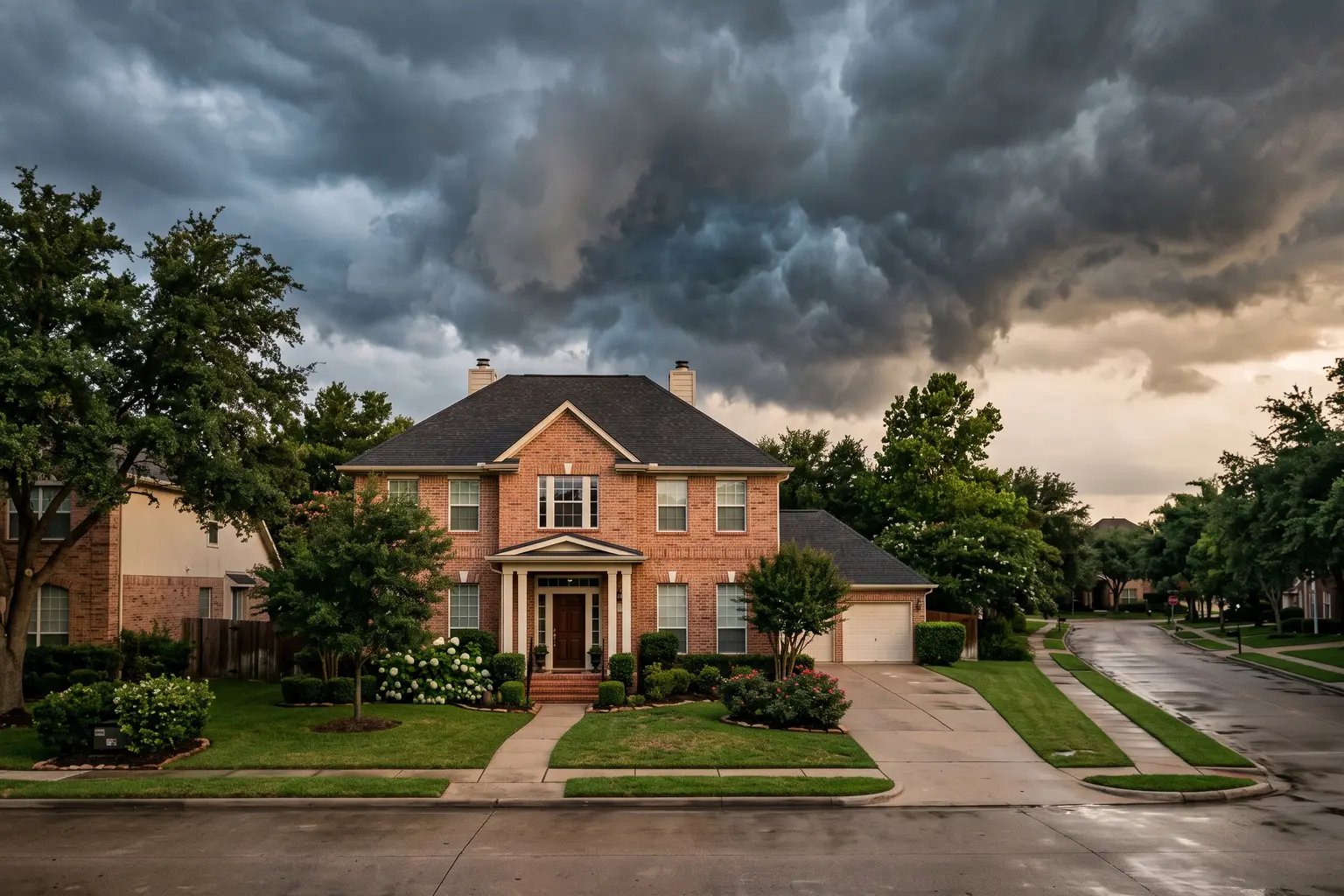
Homeowners insurance in Texas costs more than in almost any other state, and the gap is growing. According to Insurify, the average Texas premium rose 14 percent in 2025 to $4,380 a year, and the company projects a further increase to about $4,529 by the end of 2026. That is roughly 50 percent above the national average, which Insurify put at about $2,948 a year.
Those are averages. Your own quote depends on where the house sits, what shape the roof is in, how large your deductibles are, and your personal rating factors. This guide walks through the real numbers, why Texas is so expensive, and what actually moves your price.
The average cost in Texas
Insurify, which tracks premiums across carriers nationwide, reports these figures for Texas:
- Average annual premium in 2025: $4,380, a 14 percent increase over 2024
- Projected average by the end of 2026: about $4,529, a roughly 3 percent increase
- National average for comparison: about $2,948
That works out to about $365 a month for the typical Texas homeowner. Insurify ranks Texas among the five most expensive states in the country for home insurance, and 2026 marks the fifth straight year of national rate increases.
Why Texas is so expensive
Three forces drive the price: hail, hurricanes, and the rising cost to rebuild.
Hail is the single biggest driver. Texas sits in one of the most active hail corridors in the world. Insurify found that Texas accounted for 16.7 percent of all U.S. hail events between 2023 and 2025, and that hail two inches or larger fell on more than 235,000 Texas homes in 2025 alone. The claims are enormous. State Farm paid $1.4 billion in Texas hail-related claims in 2025, more than in any other state. Nationally, severe convective storms caused $51 billion in insured losses in 2025, and Texas sat at the center of it.
Hurricanes and coastal wind push up Gulf Coast rates. Along the coast, many private carriers will not write wind coverage at all. Homeowners there often buy wind and hail coverage separately through the Texas Windstorm Insurance Association (TWIA). TWIA reports an average residential premium of roughly $2,541 a year as of mid-2026, and that policy stacks on top of a standard homeowners policy that excludes wind.
Rebuilding costs and reinsurance keep climbing. Materials and labor cost more than they did a few years ago. NBC 5 Dallas-Fort Worth reported that a roof replacement in North Texas now commonly runs $20,000 to $30,000. Insurers also pay more for reinsurance, the coverage they buy on their own risk, and they pass that cost through to policyholders.
The squeeze shows up in the market of last resort. The Texas FAIR Plan Association, which covers homeowners who cannot find a private policy, grew from roughly 66,500 policies in 2021 to more than 121,600 by early 2025.
What you pay by region
Statewide averages hide a wide spread. A 2026 city-level rate comparison published by Canopy Insurance Texas shows how much location matters:
| Region | Example city | Average annual premium | Primary risk |
|---|---|---|---|
| Gulf Coast | Galveston | $7,953 | Hurricane wind, storm surge |
| Gulf Coast | Houston | $6,370 | Hurricane wind, flooding |
| North Texas hail corridor | Dallas | $6,216 | Hail, tornadoes |
| West Texas | El Paso | $2,004 | Lower catastrophe exposure |
Central Texas cities such as Austin and San Antonio generally fall between the Dallas and El Paso figures. They face real hail risk but less of it than the Dallas-Fort Worth corridor and none of the coastal wind exposure.
Two homes with the same square footage and the same coverage limits can differ by thousands of dollars a year based on ZIP code alone.
The deductible is half the story
Texas premiums look high, but the deductible structure matters just as much. Most Texas policies now carry two deductibles: a flat dollar deductible for perils like fire and theft, and a separate percentage deductible for wind and hail.
That percentage applies to your dwelling coverage, not to the claim. On a home insured for $400,000, a 2 percent wind and hail deductible means you pay the first $8,000 of a hail claim yourself. Insurify puts the average Texas wind and hail deductible at $7,761, about 2.2 percent of the average dwelling coverage amount. Industry coverage in 2026, including reporting from Live Insurance News, notes that 2 percent has become the dominant standard across most of Texas, and 1 percent deductibles are increasingly hard to find from major carriers.
When you compare quotes, compare the wind and hail deductible first. A cheaper premium with a higher percentage deductible can cost you far more in the year a storm actually hits.
What drives your individual price
Beyond location, three personal factors move Texas quotes the most. MoneyGeek’s Texas rate data shows the size of each effect:
Credit-based insurance score. Texas allows carriers to use credit in pricing, and the effect is large. MoneyGeek found Texas homeowners with excellent credit paying an average of $410 a month while those with poor credit paid $939 a month for comparable coverage.
Roof and home age. MoneyGeek’s data shows newer Texas homes averaging $344 a month against $560 a month for middle-aged homes. Carriers increasingly inspect roofs before writing a policy, and some now decline homes with roofs past a certain age or pay only actual cash value on older roofs.
Claims history. A single prior claim raised the average MoneyGeek rate from $560 to $616 a month. Claims stay on your CLUE report for up to seven years, so paying for small repairs out of pocket often beats filing.
How to lower your premium
None of these steps require reducing your coverage limits.
- Shop every renewal. The spread between carriers for the same house is routinely thousands of dollars in Texas. Compare at least three quotes from carriers or independent agents before you renew.
- Upgrade to a Class 4 impact-resistant roof when you re-roof. Fort Worth agency Firstline Insurance reports discounts that can reach 20 percent or more with the right carrier. If hail totals your roof anyway, the upgrade cost is often modest.
- Raise the flat deductible. Moving the all-perils deductible from $1,000 to $2,500 cuts the premium while leaving the wind and hail deductible unchanged.
- Bundle home and auto. Multi-policy discounts are among the most reliable in the Texas market.
- Protect your insurance score. Paying down balances and avoiding missed payments feeds directly into your rate at the next renewal.
- Ask about wind mitigation credits. Roof tie-downs, impact-rated garage doors, and storm shutters can earn credits, especially in coastal counties.
The bottom line
Expect to pay around $4,400 a year for homeowners insurance in Texas in 2026, with wide swings by region: closer to $2,000 in El Paso and above $7,900 in Galveston. The market is hardening, deductibles are rising, and the cheapest policy on paper is often the most expensive one after a storm. Compare several carriers, read the wind and hail deductible before the premium, and use the Texas Department of Insurance comparison resources at HelpInsure.com to check carrier complaint records before you buy.