
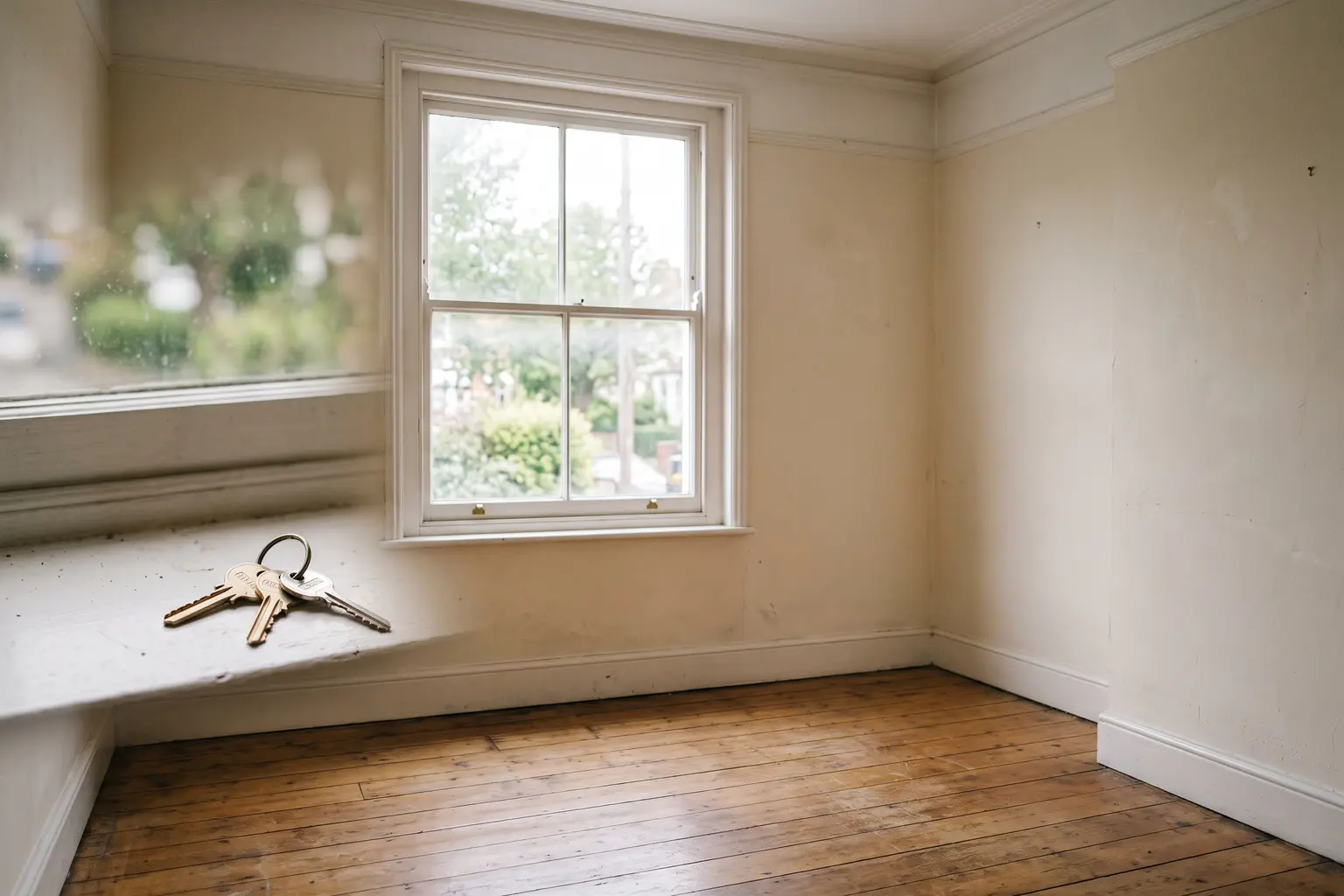
A Texas rental sits empty between tenants. A flip spends four months under renovation. An inherited house waits out probate with nobody living in it. All three owners are usually still paying premiums, and all three are usually carrying less coverage than they think. Standard homeowners and landlord policies do not void when a home goes vacant, but they quietly shed some of the coverage an empty house needs most. This guide covers what the vacancy clause actually does, when an insurer treats a home as vacant, and how to buy coverage built for an empty house.
Vacant and unoccupied are not the same thing
Insurance draws a line between two words most people use interchangeably, and the line has real legal weight. As the claims-adjusting firm Adjusters International explains it, vacant typically means empty, devoid of contents, while unoccupied means without occupants but with furniture and personal effects still present. Courts have generally held the terms are not ambiguous. A furnished lake house you visit six weekends a year is unoccupied. A rental with bare floors and no tenant on the lease is vacant.
The distinction matters because the harshest policy language targets vacancy, not unoccupancy. An unoccupied home keeps most of its coverage. A vacant one starts a clock. If your policy defines vacancy on its own terms, that definition controls, and some insurers count a home with furniture but no resident as vacant anyway, so read the definitions section before assuming which side of the line you are on.
What the 60-day vacancy clause actually does
The mechanics are narrower and more specific than the “your insurance is void” warning that circulates among landlords. Under the standard ISO forms, the HO-3 homeowners form and the DP-3 dwelling form that most Texas landlord policies are written on, coverage for vandalism, malicious mischief, and glass breakage ceases once the dwelling has been vacant for more than 60 consecutive days immediately before the loss. The DP-3 adds theft and attempted theft to that list; the HO-3 does not. Adjusters International notes that earlier editions of the forms used 30 days, and some insurers still do. The Insurance Information Institute puts the typical vacancy clause at 30 to 60 consecutive days.
Note what the clause does not do. It does not cancel the policy. Fire, lightning, explosion, windstorm, and hail coverage continue. A vacant Hill Country rental flattened by hail on day 90 of vacancy still has a hail claim. A vacant rental spray-painted and stripped of its copper on day 90 does not, because vandalism and theft are exactly the perils the clause removes. That is a bad trade for an empty house, since vandalism, break-ins, and theft of building materials are precisely the losses vacant homes attract. One more wrinkle: the ISO forms treat a dwelling under construction as not vacant, which matters for ground-up builds but does not reliably protect a gut renovation of an existing house.
Water is the other quiet gap. The standard forms exclude freeze damage from plumbing while a home is vacant or unoccupied unless the owner maintained heat or shut off the water and drained the system. After a Texas February, that condition decides real claims. The Insurance Information Institute notes that a burst pipe in an empty home can run $10,000 to $70,000 or more, largely because nobody is there to catch it early.
The fixes: disclosure, endorsement, or a vacant home policy
The first move is the unglamorous one: tell your insurer the home is empty. An insurer that learns about a vacancy at claim time, after being told the home was occupied, can deny the claim for misrepresentation, which is far worse than any exclusion. Occupancy is a fundamental underwriting fact, and it is the one landlords most often let slide.
From there you have two paths. Some insurers offer a vacancy endorsement, sometimes called a vacancy permit, which for an additional premium suspends the vacancy exclusions and keeps coverage running for a stated period. Adjusters International describes the permit as buying back the excluded coverage for a specified time. The Insurance Information Institute confirms vacancy endorsements are available, and this is often the cleanest fix for a short, defined gap, such as a rental you expect to re-lease within the quarter.
For a longer or open-ended vacancy, the answer is a standalone vacant home policy. Two specialty insurers dominate this market in Texas. Foremost publishes a Texas-specific vacant dwelling program written on dwelling fire forms, with named-peril coverage, actual cash value settlement as the base, and optional endorsements that broaden the coverage. American Modern writes vacant homes it describes in exactly the terms Texas owners encounter them: a property that is for sale, undergoing renovation, or part of an estate closing, with replacement cost coverage available for homes in good condition through its Dwelling Special product. Compare.com also lists Farmers and American Family among carriers offering vacant property coverage. These policies are typically sold through independent agents, often on short flexible terms with refunds when the home is reoccupied, so ask about the term structure when you quote.
Expect to pay for the privilege. Compare.com puts vacant home coverage at 50 to 60 percent more than a standard homeowners policy on the same house, with a range of 25 to 150 percent depending on condition, location, and term. No carrier publishes a Texas rate card for vacant risks; these are underwritten individually, so treat any dollar figure you see online as an anchor, not a quote.
Scenario one: between tenants
Most gaps between tenants never trip the clause. A two-week turnover is invisible to a 60-day vacancy provision. The risk starts when a vacancy stretches, an eviction runs long, a slow market, a make-ready that uncovers foundation work, and the owner does not notice the calendar. A standard Texas landlord policy written on a DP-3 form carries its own 60-day vandalism and theft cutoff, and a just-vacated rental is a prime vandalism target. If the unit will plausibly sit past 60 days, call the agent before day 60, not after the loss, and ask for a vacancy endorsement or a short-term vacant policy. And keep the cause-of-damage rules straight: what a landlord policy pays when a departing tenant leaves damage behind is its own subject, covered in our guide to tenant damage and landlord insurance.
Scenario two: the renovation or flip
A flip fails both tests at once. The house is empty, which triggers vacancy provisions, and it is under renovation, which most standard policies were never priced for. The clean solution is a vacant home policy written for renovation from day one, the exposure American Modern names explicitly, or a builder’s risk policy for heavier projects. Two details deserve attention at quote time. First, settlement basis: base vacant forms like Foremost’s Texas program pay actual cash value, meaning depreciated value, unless you add replacement cost, and on a house you are pouring money into, that difference is the whole game. Second, liability: an empty job site with subcontractors walking through it needs premises liability, and vacant forms vary widely on how much they include.
Scenario three: the inherited estate property
The estate house is the vacancy nobody plans. The owner dies, the homeowners policy keeps billing, and the heirs assume coverage continues while probate runs. Three problems stack up. The named insured is deceased, so the estate or heirs may not be insureds under the existing policy and should get the policy endorsed or rewritten in the estate’s name promptly. The home is now vacant, so the 60-day clock on vandalism, theft, and glass is running, and Texas probate rarely resolves in 60 days. And the house is often full of contents that make it a theft target while looking occupied enough that nobody thinks to act. Executors should call the decedent’s insurer immediately, disclose the vacancy, and move to a vacant home policy for the duration, an estate closing being one of the standard scenarios these policies are built for. The cost of a year of vacant coverage is small next to an uncovered break-in, and it is a legitimate estate administration expense.
The bottom line
A vacant Texas home does not lose its insurance; it loses the parts of its insurance that vacant homes actually use. After 60 consecutive days empty, under the standard forms, vandalism, theft, and glass coverage are gone, freeze damage is conditional on heat or drained pipes, and an undisclosed vacancy puts every claim at risk. The fix is cheap relative to the exposure: disclose the vacancy, bridge a short gap with an endorsement, and put a real vacant home policy from a specialty carrier on anything empty for the long haul. For context on what the occupied version of the coverage costs, see our guides to Texas landlord insurance and Texas homeowners insurance costs. An empty house is not a paused risk. It is a different risk, and it needs a policy that says so.